
The Blog Post That Wrote Itself: Inside an AI Blog Generation Agent
Somewhere out there is a content calendar with a gap in it because nobody had time to write the post. This is the story of what happens when an AI agent fills that gap instead, and why the interesting part is not the writing at all.
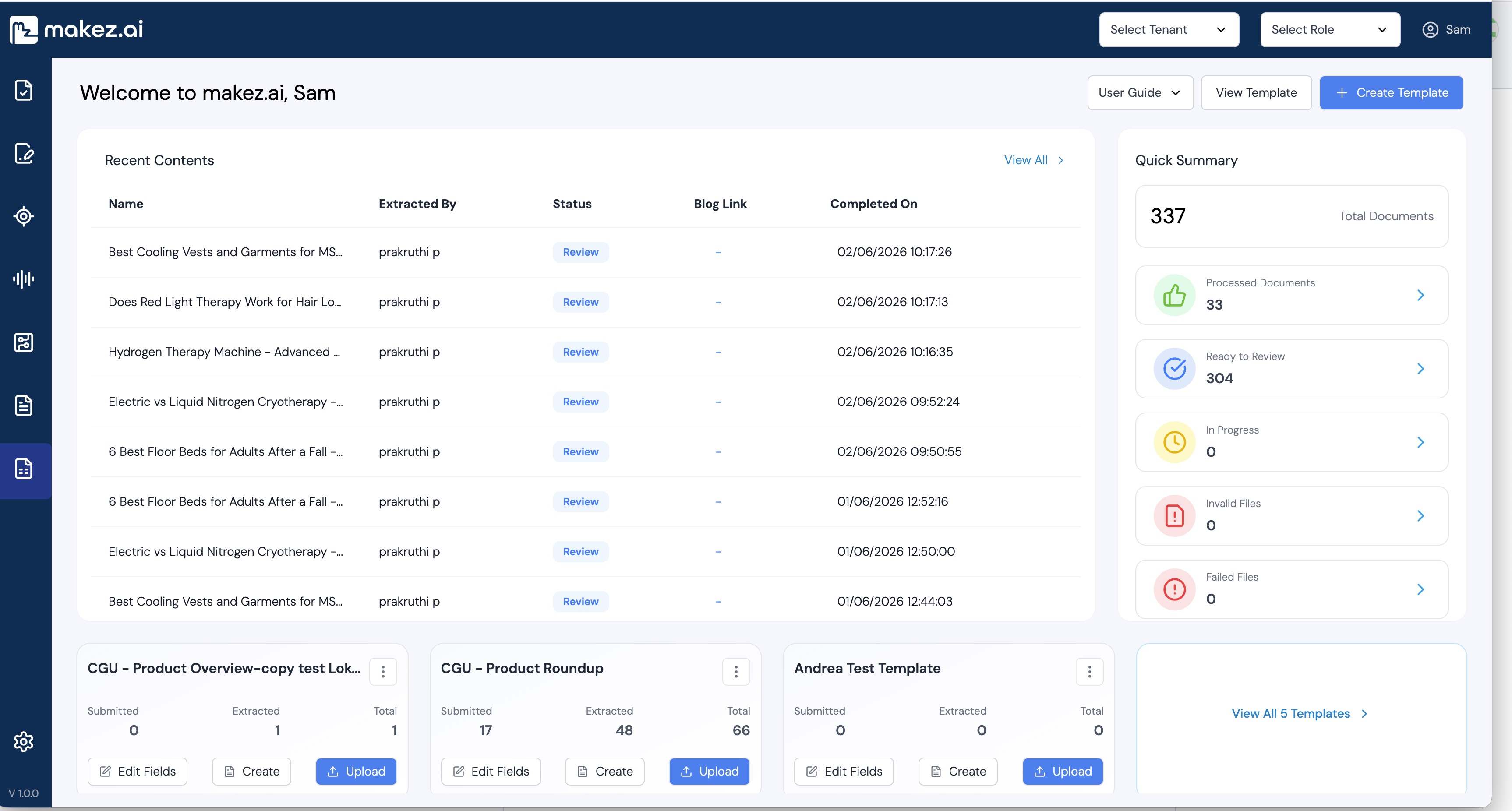
The blog pipeline dashboard, research, generation, review, and publishing, all from one place.
- An AI blog generator can own the mechanical 80% of content work, keyword research, drafting, images, formatting, scheduling, so your team keeps the 20% that actually needs a person.
- The Blog Generation Agent pulls real keyword data from Semrush, Ahrefs, and Moz before it writes a single word.
- Every draft still goes through a human review step, nothing publishes without someone approving the title, the copy, and the images first.
- It already has 30,000+ published articles behind it, across ecommerce, SaaS, and agency accounts.
Picture a Tuesday afternoon on a small content team. The blog post due Thursday is still a blank document with a working title. Before anyone writes a word, someone has to dig up keyword data, draft five title options because the first one felt flat, scroll through a stock photo library hoping today is the day it has something that does not look like every other stock photo library, then manually upload and schedule the finished post in the CMS. None of that is the hard part. None of it needed a writer at all. And yet it is exactly where the week disappears.
That is the gap an AI blog generation agent is actually built to close. Not "write me a blog post" typed into a chat window and hoped for the best, a full pipeline, research, keywords, writing, images, and publishing, connected end to end, with a person reviewing the result before any of it goes live. The interesting part is not that AI can write. It is what happens to a content calendar once someone stops doing the six unglamorous steps around the writing by hand.
An AI SEO content generator that starts with real keyword data, not guesses
A lot of tools marketed as an AI SEO content generator skip the actual SEO part and just write. The Blog Generation Agent connects directly to Semrush, Ahrefs, Moz, or a custom SEO API before it drafts anything, pulling real keyword volume, competition scores, search intent, and trending queries for the topic. That data shapes the title, the heading structure, and where keywords land in the body, so what comes out the other end is built as automated SEO content from the first sentence, not generic copy with keywords sprinkled in afterward.
This is what separates a genuine SEO blog generator from a document generator with a search bar attached, and it is why teams searching for an AI blog generator for SEO specifically, not just a writing tool, tend to land here. No manual keyword research spreadsheet, no separate SEO audit before the brief gets written, the agent builds its own brief from the data.
Titles that actually sound like you, not a template
The second most common complaint about AI writing tools is that everything sounds the same. The AI blog writer behind this agent generates title variants tuned to a chosen tone, authoritative, educational, empathetic, conversational, or a custom brief you set. Ask for three, five, or ten options, add a brand constraint or a format to avoid, and you get a shortlist that actually matches how your brand talks, before a single paragraph of body copy exists.
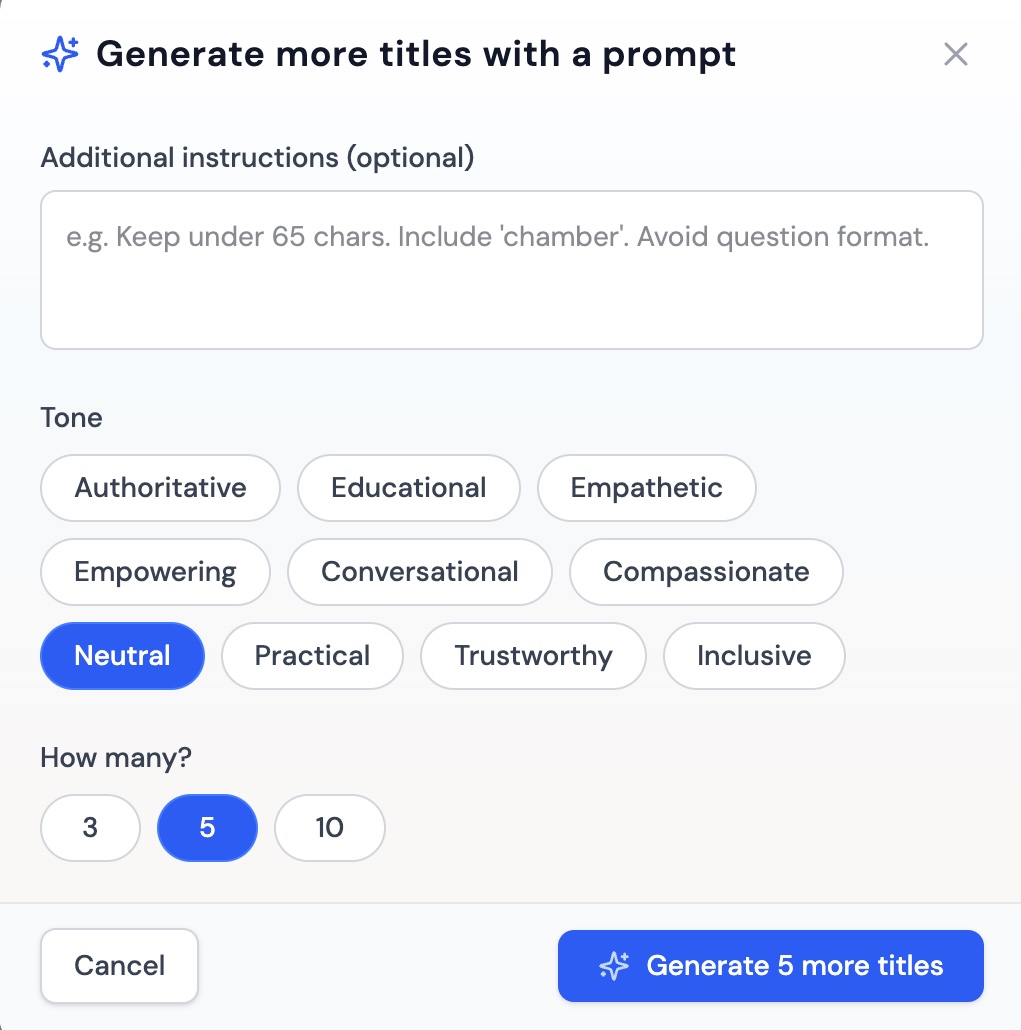
Title variants generated by tone, quantity, and brand instruction, picked before the draft is even written.
"30,000+ blogs written. Not by a content farm. By an AI agent that knew the product, the audience, and the SEO brief, and published on schedule without a single missed deadline."
Images generated for the article, not scraped from a stock library
Sourcing a relevant image is its own small tax on every post, scroll a stock library, find something close enough, hope the licensing is fine. This AI content generator skips that step entirely by generating contextual supporting images for each article section, visually matched to the topic or scenario being written about, and dropping them straight into the editor. Preview a few options, pick one, or regenerate, no licensing question to chase down afterward.

AI generated supporting images, selected and dropped directly into the article, no stock photo search required.
AI writes, a person still decides
None of this skips human judgment, it just moves human judgment to where it actually matters. Every generated article lands in a review editor before anything goes live. Read the full draft with formatting intact, pick your preferred title from the AI generated shortlist, swap an image if one is not quite right, edit any section by hand, then submit. That single action is what actually pushes the piece to your CMS.
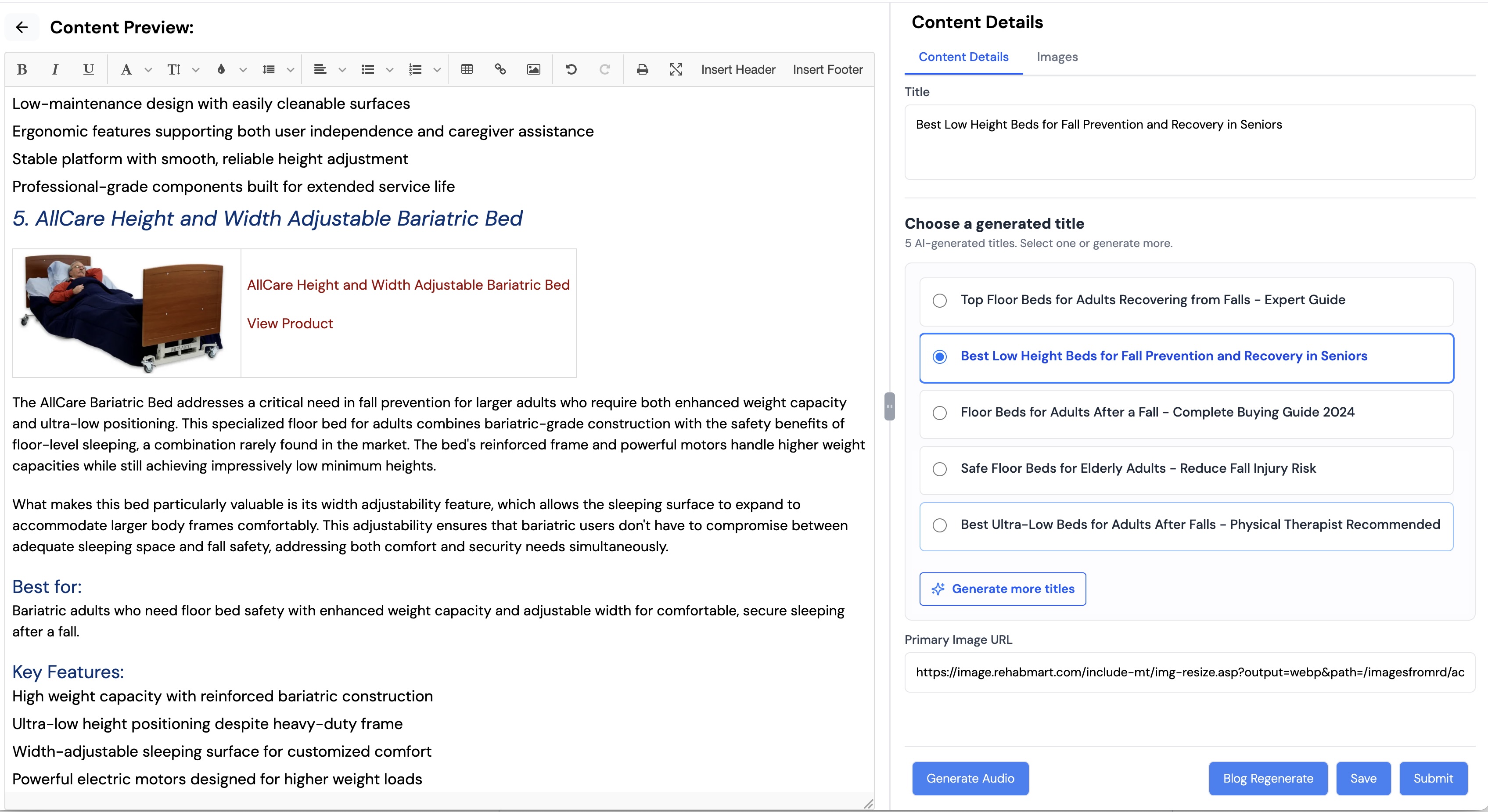
Full content editor, review the draft, approve the title and images, submit to publish, nothing goes live without this step.
This is the part that makes it a genuine AI content agent rather than a content mill: it does the mechanical work at full speed, and stops cleanly at the point where editorial judgment is supposed to happen. You can see the same review-before-action pattern across every Makez.ai agent on the Trust, Security & Governance page.
From brief to published, the full pipeline
Strip away the interface and the process behind this AI content automation workflow, the same engine driving SEO content automation across every account, is five steps, run in order, every time.
Research
Scans competitors, finds content gaps and trending questions
SEO keywords
Pulls volume, difficulty, and intent via API
Write
Long-form draft in your brand voice, headings and meta included
Enrich
Images, alt text, structured data, and schema markup added
Publish
Pushed to your CMS, scheduled or live immediately
Step five is worth pausing on. AI blog automation that stops at "here is a Google Doc" still leaves someone doing the CMS work by hand. This agent publishes directly to Sanity, WordPress, Shopify, or a custom system, on a schedule you set, which is the difference between a writing tool and an actual AI content creation platform.
Where an AI blog generator earns its keep fastest
Not every business feels this the same way. A few patterns show up often enough to be worth naming directly, and behind each one is the same AI SEO agent doing the keyword and structure work, just tuned to a different catalog or calendar.
- Ecommerce. AI content automation for ecommerce usually means two things at once, an AI content generator for ecommerce keeping buying guides and category content fresh, an AI blog generator for ecommerce on the SEO side, and an AI product description generator writing consistent, on brand copy across a catalog that changes every week. If your storefront runs on Shopify specifically, Shopify blog automation and an AI content generator for Shopify plug the same pipeline straight into the platform your team already publishes from.
- SaaS. An AI content generator for SaaS keeps a product blog moving at the pace a fast release cycle demands, without pulling an engineer or a founder into writing duty every sprint.
- Agencies. AI content automation for agencies means running content calendars for several clients in parallel without hiring a writer per account, each with its own tone, keyword targets, and publishing schedule.
- Real estate. An AI blog generator for real estate keeps listings, neighborhood guides, and market update content flowing on a schedule that a small marketing team could never sustain by hand.
- Everyone else. More broadly, this is simply what an AI content generator for businesses looks like once the mechanical 80% of content work is handled by an agent and the remaining 20%, brand judgment, editorial calls, relationship driven storytelling, stays exactly where it belongs, with your team.
The Blog Generation Agent is one piece of a wider roster. If content is not the bottleneck you are solving for right now, the same underlying platform runs reconciliation, document processing, and several other agents, all visible on the AI Agents page, and all built on the same shared architecture so adding a second agent later is configuration, not a new project.
Quick answers
Does the AI blog generator publish without anyone reviewing it first?
No. Every draft lands in a review editor first, a person reads the article, picks the title, checks the images, and approves it before it goes anywhere near your CMS.
Can an AI content generator write in our brand voice, not a generic tone?
Yes. Tone is set per brief, authoritative, educational, empathetic, conversational, and prompt instructions can lock in specific phrasing rules or formats to avoid.
Does the AI blog generation agent do keyword research itself?
Yes. It connects to tools like Semrush, Ahrefs, and Moz through their APIs, pulls keyword volume, difficulty, and intent, and uses that data to shape titles and structure before writing begins.
Ready to scale content without scaling headcount
Remember that Tuesday afternoon, the blank document, the title that would not land, the stock photo search going nowhere. That is not a talent problem. It is a throughput problem, and it is the specific problem an AI content writing tool that handles research, drafting, images, and publishing is built to solve. The gap between a business publishing twice a month and one publishing every day almost never comes down to who can write better. It comes down to who still has six manual steps standing between an idea and a published post, and a review step in the middle keeps quality exactly where your team wants it, even at that pace.
If you want to see this running on a real topic from your own content calendar, rather than a demo article, get in touch and we will walk through it live.
See it write on your own topic
Bring a real keyword or a real product category. We will show you exactly how the Blog Generation Agent would research, write, and publish it.
Book a demo